Public and political scrutiny of gambling in the United Kingdom is intensifying, with advertising now at the centre of debates around regulation, social harm, and consumer protection. While gambling itself remains legal and widely used, growing unease over the scale and visibility of promotion is reshaping how the sector is perceived by policymakers and the public.
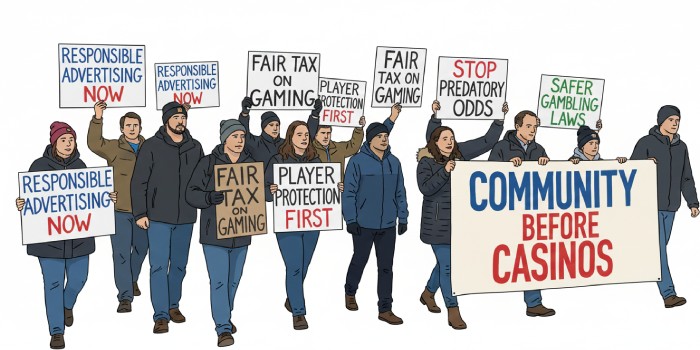
A poll by the think tank More in Common for the report Ending a Losing Streak highlights much of this. Around two-thirds of Britons support tighter restrictions on gambling advertising and sponsorship, while more than a quarter favour a complete ban on operators promoting themselves.
The concern is not about gambling per se, but the saturation of marketing across television, social media, sports sponsorship, and digital platforms. Children’s exposure is a particularly sensitive issue, with strong support for preventing under-18s from seeing gambling ads, especially in football-related content.
Eroding Trust in Oversight
This public discomfort is compounded by declining confidence in the effectiveness of gambling regulation. Many question whether existing safeguards and voluntary industry initiatives are sufficient in a digital-first market.
Experts highlight that regulatory enforcement is lagging behind advertising innovation, leaving vulnerable players more exposed and public trust increasingly fragile.
Economic Scale and Participation
The UK gambling industry remains a significant economic force. Participation levels remain high, with nearly half of adults gambling monthly. Sports betting dominates, accounting for almost half of gambling activity, and football alone generates around £1.1 billion in annual betting revenue. Young adults, particularly those aged 25 to 34, remain the most active demographic, driving much of the sector’s growth.
However, harm indicators have heightened the urgency of reform. Much of the debate traces back to the Gambling Act 2005, which liberalised advertising rules and enabled operators to promote widely across broadcast and digital media. Today, gambling advertising is embedded in everyday life, from mobile apps to public transport, raising questions about whether the regulatory framework has kept pace.
Industry experts argue that the discussion has moved beyond proving direct causation between advertising and harm. The focus now is on social responsibility, cumulative exposure, and the normalization of gambling in shared cultural spaces. While critics note the potential risk that stricter advertising rules could push players toward illegal operators, many believe that strong, well-enforced consumer protections and not advertising volume are the best safeguard.
With public sentiment, political pressure, and regulatory scrutiny aligning, the trajectory is quite clear already. Without measurable reductions in harm and stronger protections for children, statutory limits on gambling advertising are increasingly likely.